Excavation projects are high-risk endeavors within the construction and utility sectors. Every ground disturbance presents the possibility of contacting underground infrastructure, which can cause costly delays, service outages, environmental harm, and severe injury. The key to project success—and prevention of disaster—lies in meticulous preparation.
Effective planning is crucial for preventing accidents and ensuring operational efficiency in excavation projects. While some may believe that a single phone call fulfills safety requirements, the reality is much more complex. Underground environments conceal both public and private utilities, abandoned lines, and hidden risks.
A methodical process—leveraging advanced technology, regulatory compliance, and expert review—is necessary to mitigate these hazards. Following a detailed checklist is the most reliable way to protect your personnel and maintain project schedules. Below, we explain the key things to do before starting an excavation project, from securing permits to documenting findings, and more.
1. Secure All Necessary Permits
Begin by obtaining all the necessary local, state, and federal permits for excavation. Regulatory compliance is mandatory for legal, environmental, and safety reasons. Work cannot progress without the proper licenses, and penalties for non-compliance can halt your project and impose significant fines.
Engage your local building department or municipal engineering office early to specify the requirements for your specific project's scope of work. Prepare and submit accurate site plans, and keep all approved permits on-site for inspection. Early permit acquisition is integral for identifying basic site conditions and laying a strong foundation for the project.
2. Public Utility Locating
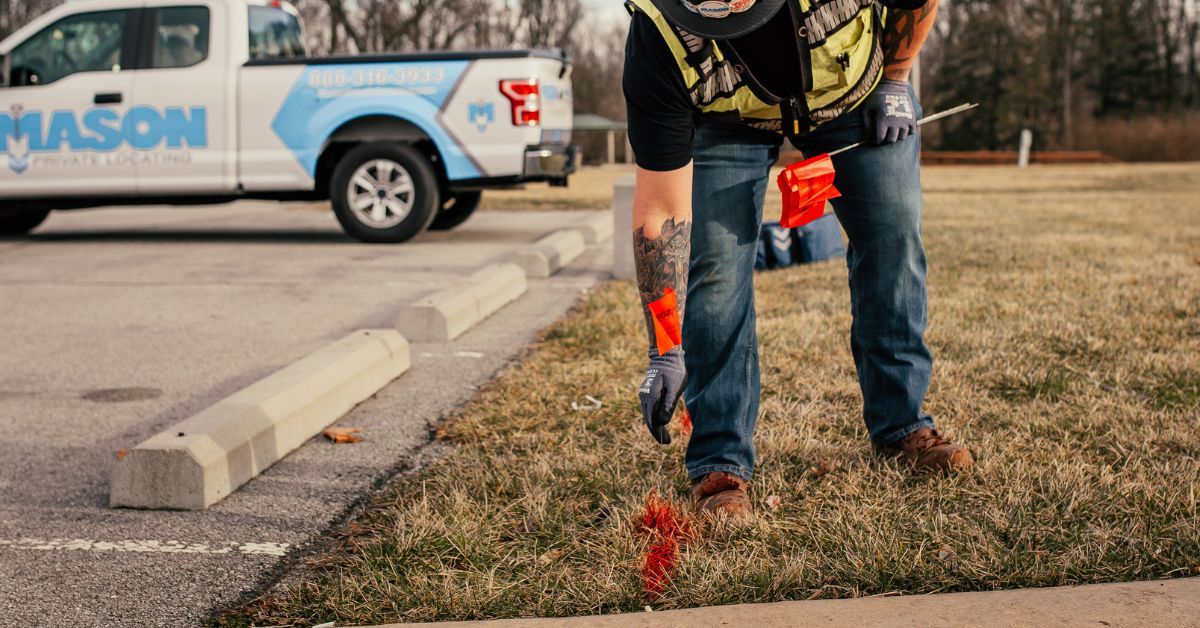
Federal law requires anyone conducting an extensive excavation project to contact the free 811 service several business days before excavation. This system notifies public utility companies—covering electric, gas, water, and telecom—of excavation plans. These providers then send locators to the work site to mark their publicly owned utilities, usually up to a defined "point of service" (e.g., from the street to a meter).
Notably, 811 does not cover all utilities. If there are private or customer-owned lines within the excavation work site, they will remain hidden and unmarked without private utility locating. Always allow the legally specified 48-72 hours for utilities to mark before continuing. Remember: 811 initiates the locating process, but does not deliver full site clearance.
3. Hire a Private Utility Locator
A substantial percentage of underground lines are private utilities, which the 811 system does not identify. These include sewer laterals, irrigation, private electric, telecom lines, and others owned by property owners. Accidentally contacting these lines can cause project delays, financial liability, and severe safety hazards.
To address these risks, engage an underground utility locator company with advanced expertise and technology, such as Mason Private Locating (MPL). Private locators extend the locating process to identify and mark both public and private infrastructure, minimizing project risk and helping prevent costly repairs or emergency interventions.
4. Conduct a Thorough Site Walk
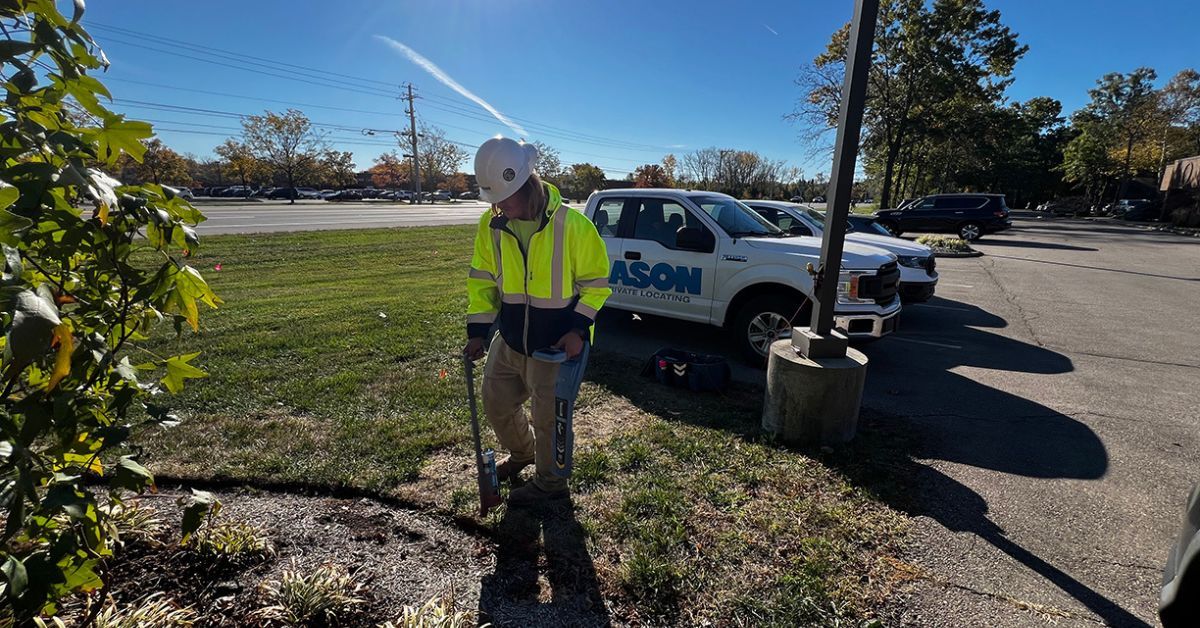
Before using scanning technology, physically inspect the project area. Review old utility maps, and visually correlate surface indicators—such as manhole covers, valves, meters, visible disturbance scars, or other site-specific markers.
This walkthrough helps uncover evidence of underlying infrastructure, highlights physical obstacles that may affect locating equipment, and allows for the preliminary identification of hazards. The insights you gain from this brief, physical examination will help you prepare the site for more precise mapping and reduce the probability of missing critical assets.
5. Find and Verify Known Utilities
Using electromagnetic (EM) locating equipment, technicians verify publicly marked utilities and newly identified private lines. This process involves applying a transmitter to a line's tracer wire, then tracing its route with a receiver.
Public utility location verification ensures the accuracy of existing marks and incorporates any additional findings from previous steps. Mis-marked or unmarked utilities can pose significant safety and operational risks; therefore, confirming the marking of every utility—public or private—is a must for every excavation site.
6. Identify Unknown Utilities
Hazards can arise from unmarked or unknown lines, which lack surface indicators, and because technicians didn't map them correctly or their managers abandoned the utilities recent years. Advanced locating methods, such as passive and induction scanning, help reveal these threats.
Induction scans introduce a detectable signal to conductive materials, flagging lines undetectable via standard EM methods or those with no accessible connection points. Thorough identification prevents encounters with hidden obstacles like abandoned pipes or unknown service lines, reducing unexpected disruptions or safety incidents during excavation.
7. Use Ground Penetrating Radar (GPR)
Another thing to do before starting an excavation project is to use GPR technology to detect non-conductive utilities—such as plastic, concrete, or fiber optic lines—where electromagnetic tools cannot provide coverage. A GPR scan transmits high-frequency radar pulses into the ground and maps anomalies based on reflected signals.
It identifies not just utilities, but subsurface voids, large rocks, or tank structures, providing essential data for both infrastructure protection and excavation safety. Reliable GPR assessments support verification of other locating results and fill critical coverage gaps, making it indispensable for comprehensive subsurface mapping.
8. Survey Sewers and Cross-Bores
Non-metallic, deep, gravity-fed, and prone to cross-bores, sewer lines present unique locating challenges. Trenchless drilling has, in some cases, led to cross-boring, where a gas line intersects through a sewer lateral and causes catastrophic damage.
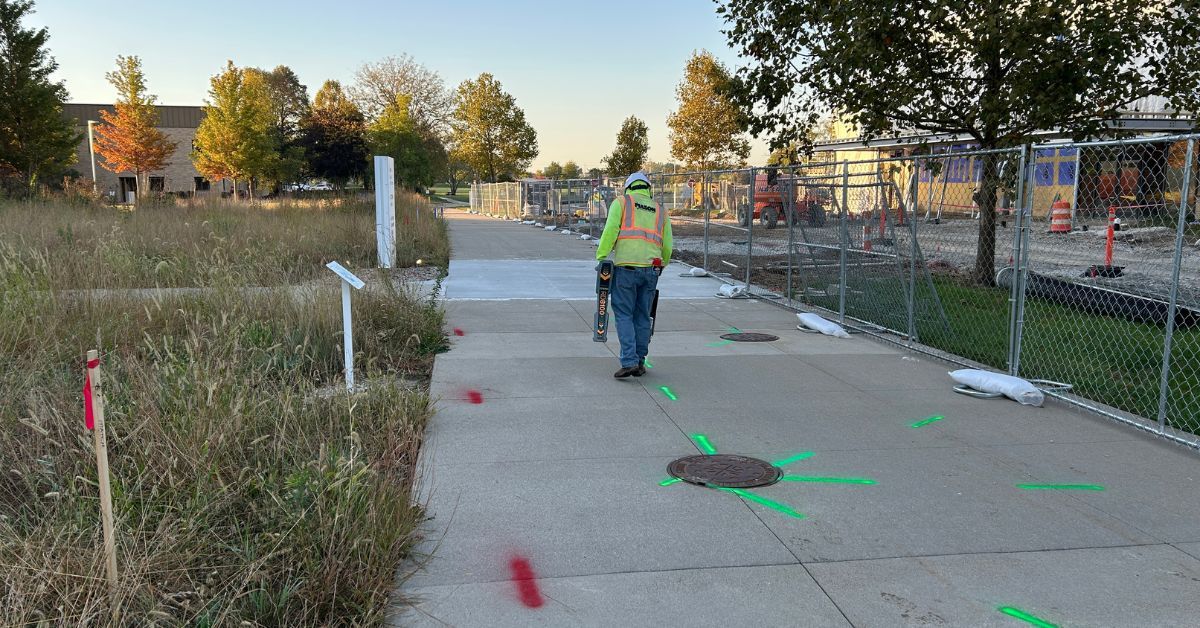
Employing sewer cameras and sondes allows accurate visual and positional mapping of sewer systems, identifies structural defects or blockages, and reveals hazardous cross-bore situations. This targeted survey protects both project participants and site occupants against future hazards.
9. Document All Findings
Accurate, accessible documentation of all locating work is essential for site safety and ongoing operations. Professional reports should include site notes, sketches, marking photographs, and GPR trail images, ideally in a digital format for sharing with stakeholders.
Comprehensive documentation provides a record of due diligence, supports operational briefings, and can be critical evidence if safety or liability issues later arise. Review all findings with site leadership before excavation begins.
10. Verify and Secure Peace of Mind
The rigorous application of these methods instills project confidence and operational efficiency. When you can trust utility marks, your excavation can proceed with fewer interruptions, accidents, or change orders.
The cost of professional locating services is a small fraction compared to the expense of utility strikes or environmental incidents. Prioritizing verification transforms safety costs into operational investment and underpins budget control and schedule reliability.
Conclusion
Excavation safety demands detailed planning, a systematic process, and technological precision. By securing all permits, using the 811 system properly, and engaging expert private locators supported by advanced methods like GPR and detailed documentation, construction teams protect personnel, budgets, and timelines. Each step identifies hazards before excavation starts, transforming uncertainty into reliability.
For comprehensive, precise, and fully compliant utility locating, partner with MPL. Our expertise allows every project to begin with clarity and confidence—delivering safety, efficiency, and total peace of mind.